
 French

Document
1306 Result(s)
| Filtré par : Anglais
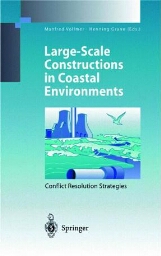
Large-scale construction in coastal environments : conflict resolution strategies
Notice: Undefined property: stdClass::$Categories in /srv/www/limbgallery/current/public/themes/ENSSMAL_2/page-records/page-listing.php on line 190
Notice: Trying to get property 'title' of non-object in /srv/www/limbgallery/current/public/themes/ENSSMAL_2/page-records/page-listing.php on line 190
In this book major construction projects are reviewed. The aim is to present case studies or topics within the areas of environmental policy, economy, ethics or science. By carefully balancing the needs and interests of all involved stakeholders and by observing basic ethical principals, it is possible to resolve the conflicts and to proceed towards constructive cooperation with commonly accepted environmental objectives. The book further contains the key conclusions and recommendations resulting from the "first international symposium on large-scale constructions in coastal environments" held on the island of Norderney from 21-25 April 1997.
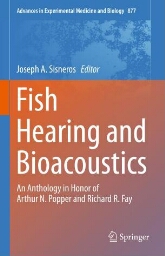
Fish hearing and bioacoustics : an anthology in honor of Arthur N. Popper and Richard R. Fay
Notice: Undefined property: stdClass::$Categories in /srv/www/limbgallery/current/public/themes/ENSSMAL_2/page-records/page-listing.php on line 190
Notice: Trying to get property 'title' of non-object in /srv/www/limbgallery/current/public/themes/ENSSMAL_2/page-records/page-listing.php on line 190
The book chapters that follow the biographies of Dick Fay and Art Popper are divided into three categories: acoustic communication and behavior, sensory biology and physiology, and morphology and neuroanatomy. The first chapter in Part II on acoustic communication and behavior is by Tim Tricas and Jackie Webb in which they review the current knowledge of sound producing mechanisms, hearing capabilities, and the likely importance of the auditory and lateral systems, especially the laterophysic connection, in acoustic communication in butterflyfishes. Jeffrey Zeyl and associates then present a review of sound production in darters, sculpin, and gobioids in a phylogenetic context that details the efficacy of signal transmission from senders to receivers and evaluates the potential functional significance of sound attributes in relation to reproductive and territorial behaviors. Next, Joe Sisneros and Pete Rogers summarize the previous behavioral work on directional hearing and sound source localization in fishes and review the current theoretical models for fish sound localization. Ashwin Bhandiwad and Joe Sisneros then review some of the common methods used in fish psychoacoustic studies and discuss associative methods such as operant, avoidance, and classical conditioning and how they are used to construct audiograms, measure frequency selectivity, and evaluate auditory stream segregation. They also present detailed considerations for experimental design with respect to stimulus presentation and threshold criteria and how these experimental variables can be used in future studies to investigate auditory perception in fishes. In Part III on sensory biology and physiology, Daphne Scares, Matthew Niemiller, and Dennis Higgs review the current knowledge on cavefish hearing, which has not been well studied, as hearing ability has only been examined in four species. These authors summarize their own studies on amblyop-sid cavefishes and offer suggestions for future research on these fascinating fishes. In the next chapter, Peggy Edds-Walton summarizes her research completed during collaborations with both Art Popper and Dick Fay on how the toadfish ear and central nervous system encode and process biologically relevant sounds and what we have learned about what the toadfish ear tells the toadfish brain specifically about the particle motion component of sound. Karen Maruska and Joe Sisneros then provide one of the first comparisons of auditory threshold curves determined by different recording methods in a single fish species, the soniferous Hawaiian sergeant fishAbudefdufabdominalis, and review past studies on representative fish species with tuning curves determined by different methods. Next, Dennis Higgs and Craig Radford examine the potential overlapping roles of the inner ear and the lateral line for encoding acoustic stimuli in the context of sound communication and other acoustically driven behaviors.
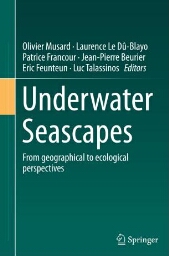
Underwater seascapes : from geographical to ecological perspectives
Notice: Undefined property: stdClass::$Categories in /srv/www/limbgallery/current/public/themes/ENSSMAL_2/page-records/page-listing.php on line 190
Notice: Trying to get property 'title' of non-object in /srv/www/limbgallery/current/public/themes/ENSSMAL_2/page-records/page-listing.php on line 190
While the European Landscape Convention adopted in Florence in 2000 by the European Council offers a public-action framework through a normative definition, the marine and submarine dimensions of landscapes are attracting growing interest from researchers worldwide. At a time when marine-conservation objectives are strongly endorsed by the Convention on Biological Diversity, the French Marine Protected Areas Agency, a public institution under the governance of the French Ministry of the Environment, has gathered prominent experts to draft the very first interdisciplinary overview of underwater seascapes, so as to initiate and lend direction to a wider reflection on this emerging research topic.
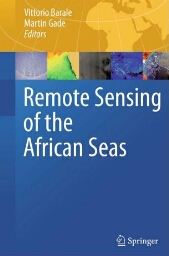
Remote sensing of the African Seas
Notice: Undefined property: stdClass::$Categories in /srv/www/limbgallery/current/public/themes/ENSSMAL_2/page-records/page-listing.php on line 190
Notice: Trying to get property 'title' of non-object in /srv/www/limbgallery/current/public/themes/ENSSMAL_2/page-records/page-listing.php on line 190
The African Seas include marginal basins of two major oceans, the Atlantic and the Indian, a miniature ocean, the Mediterranean Sea, and an infant ocean, the Red Sea. Understanding the wide spectrum of environmental features and processes of such a varied collection of marine and coastal regions requires that in situ observation systems be integrated and actually guided, by the application of orbital remote sensing techniques. This volume reviews the current potential of Earth Observations to help in the exploration of the marginal seas around Africa, by virtue of both passive and active techniques, working in several spectral ranges - i.e. measuring either reflected visible and near-infrared sunlight, as well as surface emissions in the thermal infrared and microwave spectral regions, or again the surface reflection of transmitted lidar or radar impulses of visible or microwave radiation. The in-depth evaluation of the advantages offered by each technique and spectral region and in particular by the development of advanced multi-technique systems, contributes to the assessment of the abundant natural resources that the Seas of Africa have to offer, of those in dear need of being - sustain-ably - exploited and of others that should be protected and maintained in their still pristine conditions.

Organocatalysis
Notice: Undefined property: stdClass::$Categories in /srv/www/limbgallery/current/public/themes/ENSSMAL_2/page-records/page-listing.php on line 190
Notice: Trying to get property 'title' of non-object in /srv/www/limbgallery/current/public/themes/ENSSMAL_2/page-records/page-listing.php on line 190
Due to the emergence of organ catalysis as a highly active and very exciting field of research both in academia and the life sciences industry, an Ernst Schering foundation symposium was organized in 2007 to bring together the scientific leaders in this field and to discuss the basics and current progress of organ catalysis and its application in drug discovery.
Various aspects of organ catalysis are addressed in this volume, covering a broad range of synthetic transformations such as functional group inter conversions as well £s CC- and CX-bond formations and their applications in natural product and drug syntheses. In addition, the design and scope of various catalyst Systems are discussed, from small molecules, to peptides, to genetically engineered enzymes.
Deep marine mineral resources
Notice: Undefined property: stdClass::$Categories in /srv/www/limbgallery/current/public/themes/ENSSMAL_2/page-records/page-listing.php on line 190
Notice: Trying to get property 'title' of non-object in /srv/www/limbgallery/current/public/themes/ENSSMAL_2/page-records/page-listing.php on line 190
The risks of shortages for some crucial metals and uncertainty about the land-based reserves of several others justify the search to diversify our sources of supply and investigate their potential. Mineral resources in the deep sea are attracting increasing interest with the progressive discovery of various forms of ores. France possesses areas of deep seafloor in the three oceans, as well as world-class human and technological resources and know-how, resulting from over 40 years of experience.
This study takes stock of knowledge about mineralisations and associated metals, technologies for exploring and exploiting them, biodiversity and the impacts on the deep environment and the partnerships which are vital for France and Europe.
This information will be useful for decision-makers in drawing up strategies, defining research and development programmes and in enhancing and developing commercial utilizations for these high-potential resourc|

Chemical ecology
Notice: Undefined property: stdClass::$Categories in /srv/www/limbgallery/current/public/themes/ENSSMAL_2/page-records/page-listing.php on line 190
Notice: Trying to get property 'title' of non-object in /srv/www/limbgallery/current/public/themes/ENSSMAL_2/page-records/page-listing.php on line 190
Cells that live in the soil have both a changing pattern of distribution and a changing pattern of chemical substances surrounding them. Sometimes the cells will be relatively independent of each other, and sometimes they will be closely linked in some type of colony or even a small multicellular organism. In considering the primitive organization of the soil and the role played by the chemical substances, I want to show that this chemical ecology gives a direct insight into the evolutionary origin of multicellularity and its development in the life cycle of an organism.
The reason for choosing the organisms of the soil rather than aquatic forms is simply that the soil has more structure and more pattern; the environment of water is relatively homogeneous and constant, at least from the point of view of a microorganism. The size of the grains of soil, the air cavities, the moisture content, the distribution of organic, edible material will differ from one region to the next, or even in the same region over a period of time. The soil is a truly heterogeneous environment, and the problems of adapting to such conditions are correspondingly diverse.
Optimal expansion of a water resources system
Notice: Undefined property: stdClass::$Categories in /srv/www/limbgallery/current/public/themes/ENSSMAL_2/page-records/page-listing.php on line 190
Notice: Trying to get property 'title' of non-object in /srv/www/limbgallery/current/public/themes/ENSSMAL_2/page-records/page-listing.php on line 190
How to carry out an optimal expansion of an existing water resources system is of continuing importance because of the rising demand for and limited supply of water in many areas of the world, particularly in the southwestern part of the United States of America. Governmental agencies in the U.S.A. and elsewhere have made large public investments in the field of water resources in the past and will continue to do so in the future. Whenever investment in a water resource project is under consideration, important questions such as what is the economic value of the project(s), what is the optimal scale of development of the project(s), and when the project should be constructed need to be answered? It is only through the use of an analytical economic evaluation that competitive uses for capital can be quantitatively evaluated.
This monograph describes a methodology that can be used in water resources planning taking into account both water quantity and quality while still remaining computationally tractable. It is concerned with the optimal expansion of a realistic water resources system to meet an increasing demand for municipal and industrial use, irrigation, energy, and recreation over a planning horizon of the next years. Although the problem of quantitatively describing a water resources system in a realistic fashion is forbidding, the outlook for quantitative analysis is good. Some of the problems of describing a river basin include:
1. We have only a fragmentary knowledge of the relevant parameters to include in a river basin model.
2. We do not know how important some of the variables are in relation to others.
3. We do not know which are the most significant parameters in any model in influencing the model outputs.
Nevertheless, by formulating models of river basins that mesh successfully with the available optimization techniques, and by analyzing and improving the models, these difficulties can be ameliorated.
In formulating the model of the river basin it is assumed that a number of possible dam sites are available for the further regulation of imported waters into the basin.
The model has been limited to systems that have (1) deterministic inputs, (2) a network configuration, (3) linear constraints, and (4) capital investment and operating decisions made on a yearly and a monthly basis, respectively, so that the operating policy and construction policy could be optimized.
The model of the system did not include (1) stochastic effects or (2) intangible benefits and costs that could not be quantified. Emphasis in the preparation of the model has been placed on the diversity of applicability rather than a specific river basin.
After discussion of the criteria for and scope of the problem of expanding an existing water resources system in Chapter 1, a water resources system model is developed and explained in Chapter 2.
In Chapter 3 an optimization strategy is developed to maximize, over the set of alternative projects, the sum of the discounted present value of net earnings of the system subject to the water demands and various institutional, physical, and budgetary limits. The optimization problem is posed as a 0-1 mixed integer programming problem that is decomposed into the set of all feasible combinations, a capital budgeting problem; and the economic return is determined for each combination, an operating policy problem.
In Chapter 4 an example problem is formulated, solved, and discussed.
The efficacy of the optimization algorithm is demonstrated by applying it to the solution of a capital investment problem in a model river basin that resembles a real river basin (the Maule River Basin in central Chile).
Chapters 5 briefly shows how to carry out a sensitivity analysis on a water resources system to discover the critical parameters and inputs in the model, parameters whose values in principle have to be obtained with the greatest accuracy.
Chapter 6 indicates how water quality can be incorporated into the water quantity model. A FORTRAN listing of the computer program to execute the optimization algorithm will be found in Appendix A. For those not familiar with or who desire more information about existing techniques in optimization, we provide references at appropriate places in this text to the introductory book by Beveridge and Schechter, "Optimization Theory and Practice," McGraw-Hill, New York, 1970.
The approach and methodology developed in this monograph are intended to provide guidance to policy and decision makers. It is intended to isolate the economic effects of interrelated factors of water quantity and quality more explicitly to the end that water resources planning may more effectively and efficiently serve the needs of society. Probably one of the major flaws in the systems approach to water resources development is the inability of the scientist and engineer to provide the political decision makers with meaningful plans. It is hoped that this m
Histological techniques for electron microscopy
Notice: Undefined property: stdClass::$Categories in /srv/www/limbgallery/current/public/themes/ENSSMAL_2/page-records/page-listing.php on line 190
Notice: Trying to get property 'title' of non-object in /srv/www/limbgallery/current/public/themes/ENSSMAL_2/page-records/page-listing.php on line 190
This is intended to be a very practical book for those who would study cells or tissues with an electron microscope. Although all the tools have been at hand for this sort of work for more than five years, effective work has been done in relatively few laboratories. In general this is because of the complexity of the techniques and the consequent lack of fully trained investigators; yet there is no one aspect of the problem that is particularly difficult in itself. But success depends upon attention to much detail, as well as knowledge and competence in widely diversified fields. The adage that "a chain is no stronger than its weakest link" is quite pertinent. To make successful electron micrographs of tissues one must preserve the specimens with skill, section them with art, use an electron microscope with understanding, and do photography with facility.
Except for a few "old timers" who grew up with the subject, most senior investigators who are doing effective work today apprenticed themselves at one of two laboratories, in the United States, at the Rockefeller Institute, in Europe, at the Karolinska Instituter. Of course with time new clones have been established, and there are now a number of "teaching laboratories" to which one can go for instruction and experience. No doubt, a year's apprenticeship in such laboratory can be the most efficient, effective, and stimulating way of becoming established in this field. But there are many who are interested, for various reasons find it impractical or impossible to serve this apprenticeship. It is to this group in particular that this volume is directed.
It should be possible for a novice to gain reasonable competence through his own ingenuity if he has a guidebook to help with the maze of detail. It will assist the beginner immensely if he can arrange to spend two or three days with someone competent in this field who will systematically go through all of the steps involved with him while he takes notes. This will, in essence, be a survey which will get the novice started. He should then go back to his own laboratory and work for a few weeks, or even months, as best he can with books and with whatever local help is available.

ISO standards for geographic information
Notice: Undefined property: stdClass::$Categories in /srv/www/limbgallery/current/public/themes/ENSSMAL_2/page-records/page-listing.php on line 190
Notice: Trying to get property 'title' of non-object in /srv/www/limbgallery/current/public/themes/ENSSMAL_2/page-records/page-listing.php on line 190
The book adresses scientiste and technical experts who have already some background knowledge in geographic information Systems (GIS) and who want to know more about standardization in GIS, in particular, the role of the ISO, the authors also meet the needs of programmers who are going to implement ISO 19100 standards and who need a better understanding of the overall structure of the standards. Last, but not least, this richly illustrated book will help readers to better understand the rather abstract ISO documents.
Large-scale construction in coastal environments : conflict resolution strategies
- Auteur
- Grann, Henning
- Sujet
- Structure musculaire ; Littoral ; Aménagement ; Environnement côtier
- Cote
- 551.470 2 VOL
- Date_TXT
- Berlin : Springer , 1999
- Type de document
- Livre
Fish hearing and bioacoustics : an anthology in honor of Arthur N. Popper and Richard R. Fay
- Auteur
- Sisneros, Joseph A
- Sujet
- Acoustique ; Poissons ; Physiologie ; Système de la ligne latérale ; physiologie ; Perception auditive ; physiologie ;Ouïe ; physiologie ;
- Cote
- 597.74 SIS
- Date_TXT
- New York : Springer , 2016
- Type de document
- Livre
Underwater seascapes : from geographical to ecological perspectives
- Auteur
- Musard, Olivier
- Sujet
- Landscapes ; Seascapes ; Diversity of underwater ; Landscapes ecology ; Mediteranean benthos
- Cote
- 590 MUS
- Date_TXT
- New-York : Springer , 2014
- Type de document
- Livre
Remote sensing of the African Seas
- Auteur
- Barale, Vittorio, Gade, Martin
- Sujet
- Océanographie ; Télédétection ; Coasts ; Remote sensing ; Oceanography ; Remote sensing ; Télédétection ; Méditerranée (mer) ; Télédétection ; Atlantique (océan) ; Oceanography ; Remote sensing; Congresses
- Cote
- 778.35 BAR
- Date_TXT
- London : Springer , 2014
- Type de document
- Livre
Organocatalysis
- Auteur
- Reetz, M.T., S. Jaroch, B. List
- Sujet
- Organocatalysis
- Cote
- 541.395 REE
- Date_TXT
- New York : Springer , 2008
- Type de document
- Livre
Deep marine mineral resources
- Auteur
- Fouquet, Yves, Lacroix, Denis
- Sujet
- Atlas; Mer ; Cartes ; Littoraux ; Cartes ; Littoraux ; Dictionnaires illustrés ; Mer ; Dictionnaires illustrés ; Encyclopédies et dictionnaires
- Cote
- 551.468 6 FOU
- Date_TXT
- Paris : Springer , 2012
- Type de document
- Livre
Chemical ecology
- Auteur
- Sondheimer, Ernest
- Sujet
- Environnement ; Ecologie ; Chimie
- Cote
- 577.5 SON
- Date_TXT
- London : Academic press , 1970
- Type de document
- Livre
Optimal expansion of a water resources system
- Auteur
- O'laoghaire, D.T.
- Sujet
- Ressources ; Eaux
- Cote
- 628.11 OLA
- Date_TXT
- London :Academic press , 1974
- Type de document
- Livre
Histological techniques for electron microscopy
- Auteur
- Pease, Daniel C
- Sujet
- Techniques ; Microscopie ; Histologie
- Cote
- 571.59 PEA
- Date_TXT
- New York : Academic press inc , 1964
- Type de document
- Livre
ISO standards for geographic information
- Auteur
- Kresse, Wolfgang, Kian Fadaie
- Sujet
- Géographie ; Information ; Systems (GIS)
- Cote
- 526.982 KRE
- Date_TXT
- London : Springer , 2004
- Type de document
- Livre