
 French

Permalien :
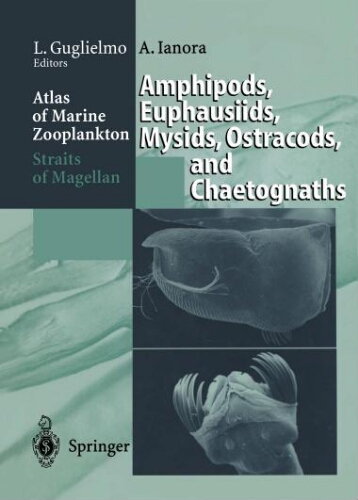
Atlas of marine zooplancton straits of Magellan : amphipods, euphausiids, mysids, ostracods, and chaetognaths
- Date_TXT
- Berlin : Springer , 1997
- Cote
- 912 GUG/T2
- Auteur
- Guglielmo, L., A. Lanora
- Type de document
- Livre
Description :
Tthis book entitled " Amphipods, Euphausiids, Mysids, Ostracods, and Chaetognaths" is the second of two volumes of the "Atlas of Marine Zooplankton Straits of Magellan".
Before we can begin to ask sensible questions about how a pelagic community functions, we must first know of which species it is composed. This volume, along with its copepod companion, now sets the stage for the studies of ecosystem, community and population dynamics that will challenge future generations of marine scientists.
The Straits, belonging to the Magellan Province, are well known for their relatively high diversity of species; but only very few detailed faunistic surveys have been carried out so far.
"The Atlas of Marine Zooplankton Straits of Magellan" is an important contribution to the knowledge of the plankton communities in sub-Antarctic regions and the study of the faunal assemblages of the area where the waters of the Atlantic and Pacific Ocean mix, and is designed to allow rapid identification of the 39 species described, several of which are new to the region.
While the first volume dealt with the taxonomic composition and ecology of the copepods, the world's most numerous groups in the pelagic community, the present volume describes those groups of pelagic organisms that rank next in abundance: amphipods, ostracods, chaetognaths, euphaussids and mysids, their taxonomy, spatial distribution and abundance. Background data on their physical and biological environments is also provided. Several of these species reported have not been previously sampled in this geographic area.
Emphasis is given to illustrations- most of them high quality scanning electron micrographs plus drawings-, accompanied by brief taxonomic descriptions.
The primary concern of this Atlas is to facilitate and promote future biological studies in the Antarctic by both experts and beginners. Additionally, this handbook provides a board basis of knowledge that will equip the reader with a greater understanding of plankton communities and biogeography of this sub-Antarctic region.